When the 'Jokes' Aren't Funny
Boys examine the line between harm and humor in book talks
June 2026

When Head of Middle School Ophelia Ma read Accountable by Dashka Slater, she immediately realized that it as a book boys could relate to. "What stood out to me was how closely connected it is to boys’ education," she says. "It painted a very clear picture of boy culture and how humor plays a role in it."
The award-winning young adult nonfiction book explores the real-world consequences that unfold after a group of high school students in Northern California created a racist social media account, seeking to impress friends. The book was on the Browning’s summer reading list, so some parents read it with their sons, and started recommending it to others. Clearly, it touched a nerve with its relatable themes and nuanced approach to a complex and painful situation. "This book helps the reader see the journey that the school community went through from all sides," Ms. Ma notes.
Wanting to expose more families and boys to a story that was so timely and resonated with many different audiences, Ms. Ma created a structure that would allow Grade 8 boys and their parents to talk about the book in "fishbowls" – that is, discussion groups where an audience observes the participants. These events were mandatory for the boys, who read the book together in their English classes. Many of their parents attended the discussions, held over four afternoons this spring.
"These are the waters the kids are swimming in," Ms. Ma says, "and families can sometimes underestimate how often these kinds of situations occur online and how badly they can affect the victims. Allowing both parents and boys to see one another talking about their experience of the subject matter was very powerful."
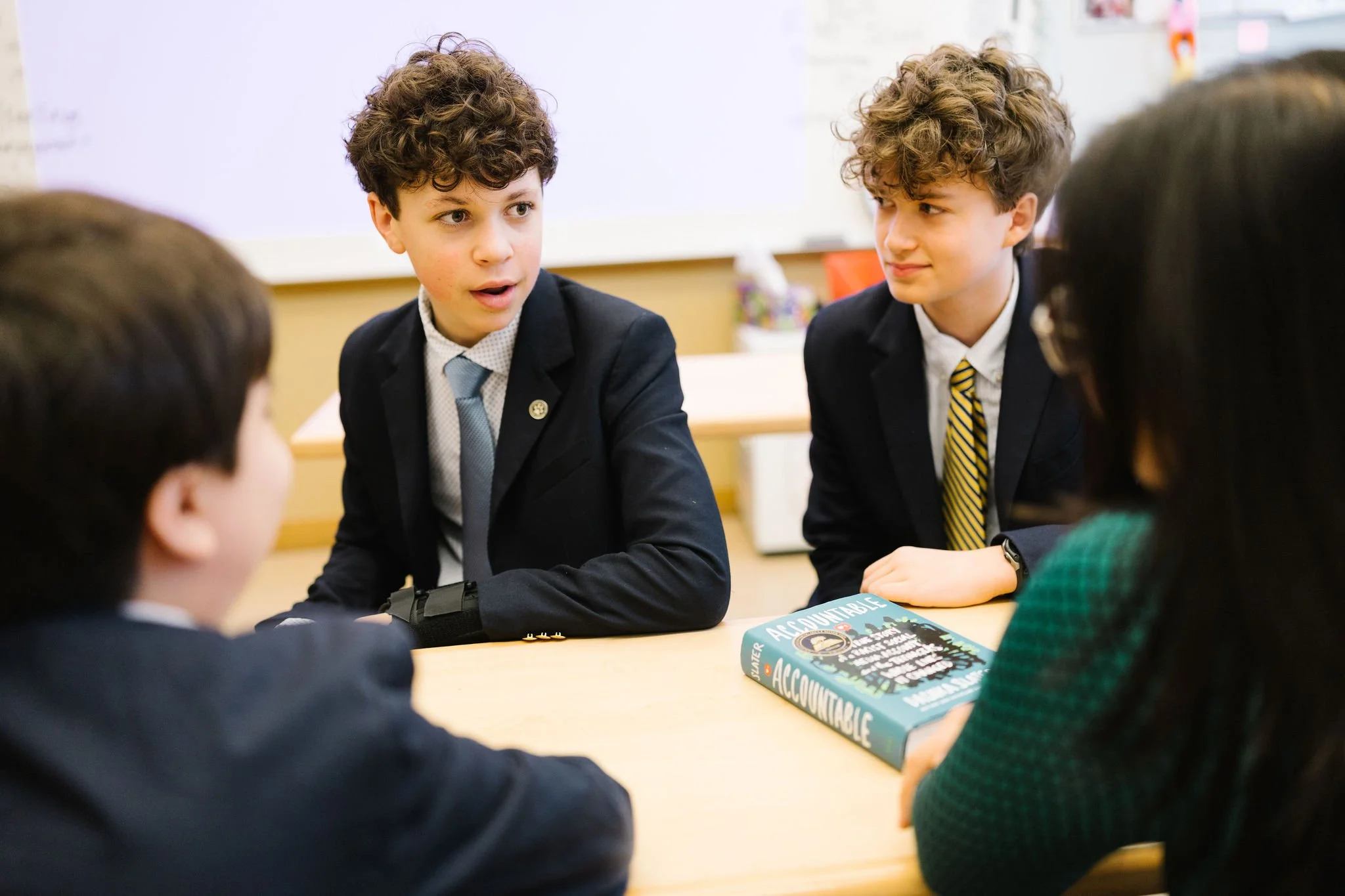
Grade 8 boys engage in a fishbowl discussion of Accountable, examining the intersection of humor, identity, and responsibility.
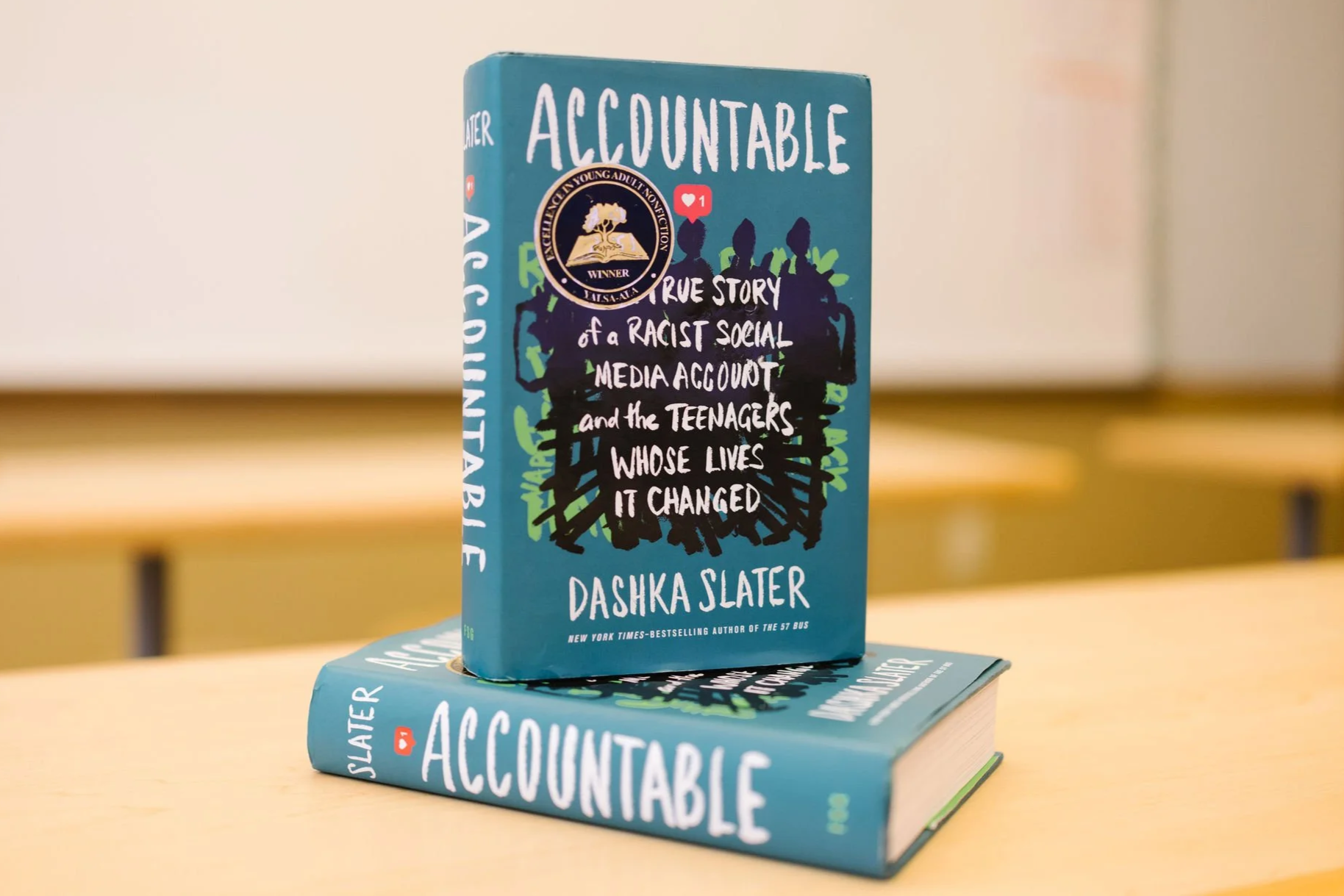
Accountable by Dashka Slater sparked thoughtful conversations among students and parents about online culture, belonging, and the impact of our words.
A structured discussion leads to deep reflection
After an introduction to the fishbowl concept, faculty members facilitated discussions between the boys, and, afterward, their parents. The boys discussed why edgy humor is popular, how the issues of race and bias in the book connect to life at Browning, the power dynamics in the lives of the teens featured in the book, and how the incident affected the students who were targeted. The boys also talked about the incident in the context of Browning's core values, discussed what it means to be accountable, and why it can be hard to make amends after hurting someone.
After watching the boys, parents gathered in a circle to react to what the boys said, probing which parts of the story hit closest to home for them. They were also asked to imagine being the parent of one of the targeted students and how challenging they might find forgiving a student that caused the harm. The facilitators also informed parents that organized hate groups are taking advantage of "meme culture" to spread and normalize racist, homophobic and antisemetic content and discussed how parents might create pathways to understand more broadly what their kids are doing online.
To conclude each event, the entire group discussed both fishbowl, talking about what stood out for each group, what families could do to avoid these kinds of incidents here, and what boys wished their families understood about edgy humor. They also shared their appreciation for the experience.
"In the Middle School, the desire to belong drives most behavior. Negative group dynamics often aren’t driven by any particular kid, and adults tend to be overly optimistic about their boys' ability to resist or push back." Ms. Ma says, "Grade 8 is a good time to engage boys on this kind of material because they are mature enough to want to reflect and make better choices."
An unexpected benefit of the facilitated discussions, she added, was that parents observed their children engaging in the kind of intellectual discussion they might have in a classroom, which is not something that families would typically see.
“Parents were impressed at the quality and depth and thoughtfulness of the discussion. Hearing our boys’ voices actually made them less worried about Browning boys making bad choices,” Ms. Ma said.
As for the boys, Ms. Ma says that they understood that there's a high price to pay for using words and images that demean or threaten others' identity. "They know that edgy humor has a cost — and for our community, that cost is too high."


